
BRACES
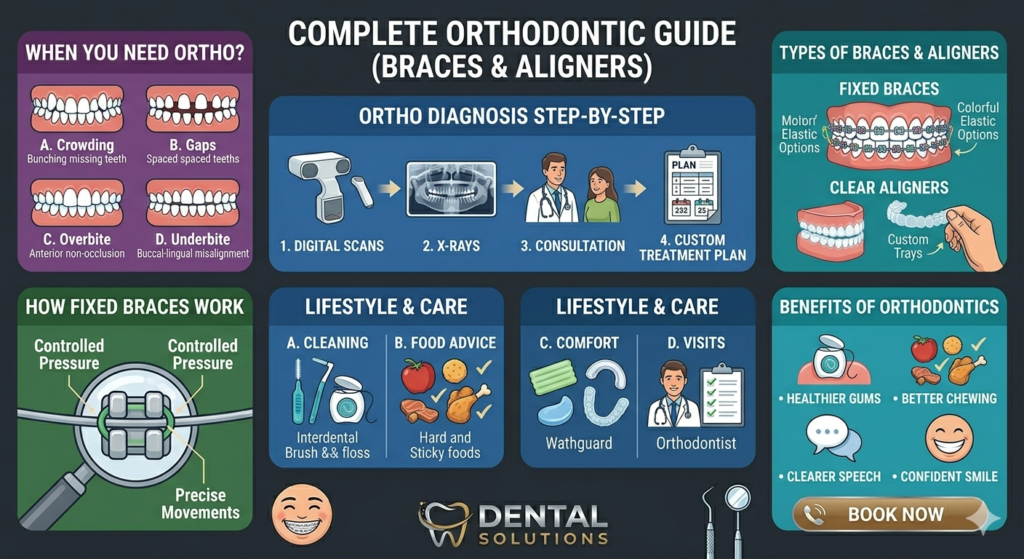
Modern orthodontics has evolved far beyond the bulky metal “train tracks” of the past. Today, we offer a range of options designed to fit your lifestyle, aesthetic preferences, and budget.
Which Type of Braces is Right for You?
Choosing the right system depends on the complexity of your alignment needs and how much you want your braces to show.
1. Traditional Metal Braces
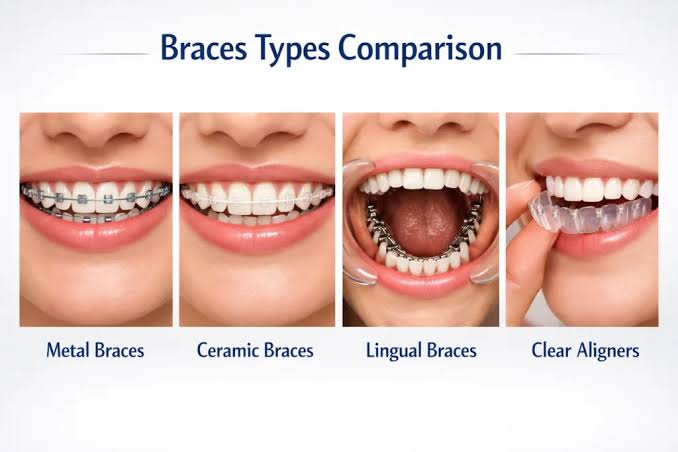
The most common and cost-effective option. Made of high-grade stainless steel, today’s metal braces are smaller, sleeker, and more comfortable than ever.
- Best for: Complex alignment issues and patients who want the most efficient treatment.
- Fun Factor: You can customize the color of your elastics at every appointment.
2. Ceramic (Clear) Braces
These work exactly like metal braces but use clear or tooth-colored polycrystalline alumina brackets.
- Best for: Adults or teens who want the reliability of fixed braces but with a much more subtle, “blended” look.
- Note: They are slightly more brittle than metal and require careful cleaning to prevent the clear ties from staining.
3. Clear Aligners (Invisalign)
Aligners are removable, transparent trays custom-molded to your teeth. You receive a series of trays that gradually shift your teeth into place.
- Best for: Patients who want total invisibility and the ability to eat whatever they want (since you remove them to eat).
- Commitment: You must wear them for 22 hours a day for the treatment to be effective.
Anatomy of Your Braces
Understanding the parts of your braces helps you communicate better with your orthodontist and take better care of your appliance.
- Brackets: The small squares bonded directly to each tooth.
- Archwire: The thin metal wire that runs through the brackets, providing the pressure that moves the teeth.
- Ligature (Elastic Tie): The tiny rubber band that holds the archwire to the bracket.
- Inter-arch Elastics: Larger rubber bands used to adjust your bite (the way your top and bottom teeth fit together).
Life with Braces: Quick Tips
- The Adjustment Period: Your teeth will feel “tight” or sore for 3–5 days after getting braces or having them tightened. Stick to soft foods like yogurt, mashed potatoes, and smoothies.
- Oral Hygiene is Critical: Food gets trapped easily. You’ll need to brush after every meal and use special “floss threaders” or interdental brushes to get behind the wire.
- Foods to Avoid: Keep away from “Sticky, Hard, and Crunchy”—this means no gum, caramel, popcorn, or biting directly into apples or corn on the cob.